
ADAS driving simulator
Six physical driving rigs, seven languages, and a stand that stayed full for two solid days at Belron's global event in Lisbon, with zero technical failures.
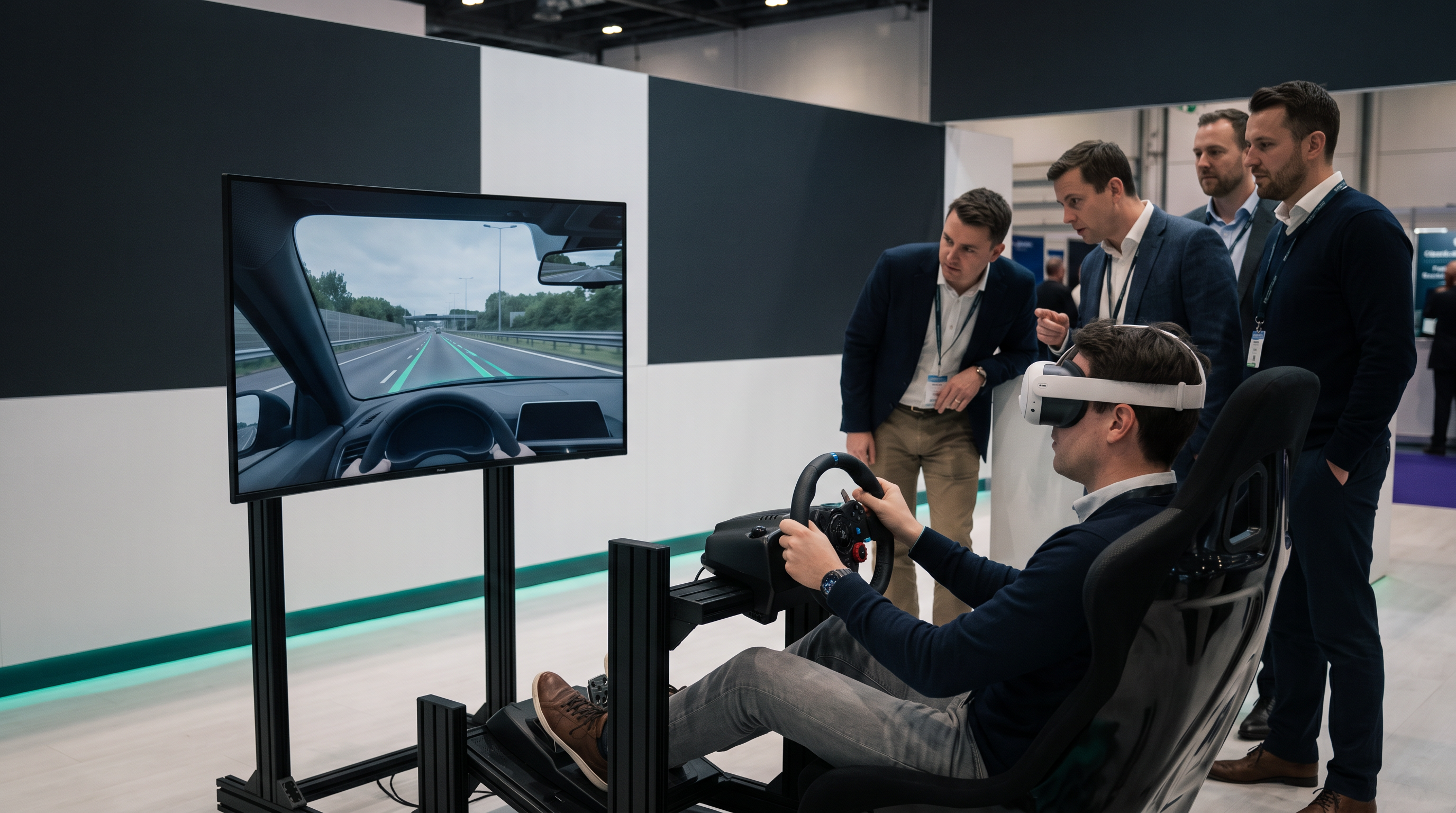
Belron is the world's largest vehicle glass repair and replacement group, home to brands including Autoglass and Carglass. When a windscreen is replaced, the cameras and sensors behind it need recalibrating so the car's advanced driver assistance systems (ADAS) keep working as designed. We built a VR driving simulator that lets people experience for themselves how ADAS behaves after a windscreen replacement and recalibration. Each driver takes the wheel of a real simulator rig, puts on a Meta Quest 3, and feels the difference rather than reading about it.
ADAS is one of the most important developments in road safety, but it is largely invisible. Lane keeping, emergency braking, and the sensors that drive them sit quietly behind the windscreen, so it is hard for anyone, including people who work in the industry every day, to build an intuitive sense of why recalibration after a glass replacement matters.
Belron wanted its people across the group to understand this properly, and to do it in an educational way. The brief was deliberate: help people experience how these systems behave, not scare them into paying attention.
A VR driving simulator built for Meta Quest 3, paired with real hardware. Each driver sits in a physical rig with a seat and steering wheel, so the experience feels like driving rather than watching. Inside the headset they drive real road scenarios and experience how ADAS features respond, and what recalibration after a windscreen replacement means for the way the car behaves.
We built six headset and rig stations so groups could drive at once, with a 55-inch curved screen showing each driver's road view to the crowd. That spectator view mattered: at a busy event, the queue learns almost as much as the person in the seat.
The whole experience was localised into seven languages so colleagues from across Belron's international business could use it in their own language.
We designed the simulator around two constraints: it had to feel authentic to drivers, and it had to run reliably at a major live event. That meant tuning the driving feel against real hardware, keeping the teaching points inside the drive itself rather than in menus, and building the stand experience, from rigs to spectator screen, for continuous throughput over long days.
Localisation into seven languages was planned in from the start rather than bolted on, so every market's colleagues got the same experience.
The simulator headlined at Best of Belron 2026, the group's global event in Lisbon, running for two full days. The stand was continuously busy from open to close, and people kept bringing colleagues back to try it. Across the whole event there were no technical failures.
A second phase is now planned to convert the simulator from an event experience into an ongoing training tool for the business.
Have a project like this in mind?
A 20-minute intro is the fastest way to find out if we're the right partner.
Prefer email? hello@boundlessimmersive.com